Create and download your non-furnished rental template for free in compliance with all the latest regulatory updates.



The unfurnished lease: specifics and mandatory elements
The unfurnished lease, also known as the empty rental lease, is the most common form of rental contract in France. Governed by the law of July 6, 1989, it sets the rights and obligations of both the landlord and the tenant.
This rental contract is less flexible than furnished rental, it remains, nonetheless, a safe and stable solution for landlords seeking regular rental income and long-term occupancy.
Unfurnished lease agreement: what are the specifics?
Duration of an Unfurnished Lease
The duration of the unfurnished lease depends on the type of landlord:
3 years if the owner is a natural person,
6 years if it is a legal entity (company, SCI, etc.).
The contract is automatically renewable at its end, except in the case of notice given by one of the parties.
The tenant can leave the accommodation at any time, with a 3-month notice period (reduced to 1 month in tense areas or for specific reasons: transfer, job loss, etc.).
An empty rental is ideal for landlords seeking rental stability and long-term tenants, thus limiting vacancies between two leases. The duration of empty leases is drastically longer than that of furnished accommodations.
Recoverable Charges
In an unfurnished rental, the landlord can recover certain charges paid in advance on behalf of the tenant.
These primarily concern:
the charges related to the maintenance of the building (elevator, common areas, green spaces),
the consumption of cold and hot water,
the household waste collection tax (TEOM).
These charges are adjusted once a year, upon presentation of the receipts.
The lease must clearly indicate the nature and calculation method of the monthly provisions for charges.
Prioritize transparency and keep all receipts to avoid any disagreement with the tenant during the annual adjustment. However, in an empty rental, the landlord is not responsible for potential deterioration of items, thus the tenant cannot request the replacement of certain items.
Inventory
As with any rental, an inventory at entry and exit must be established and signed by both parties.
This document precisely describes the condition of the housing (walls, floors, equipment, cleanliness, meters…).
It will serve as a basis for comparing the situation when the tenant leaves and determining, where applicable, the deductions from the security deposit.
The inventory can be carried out on paper or digitally.
In case of disagreement, recourse to a bailiff is possible, with the costs being shared.
Documents to Attach to the Lease
An unfurnished lease must be accompanied by several mandatory documents, ensuring the transparency of the rental.
Among them:
The Technical Diagnostic File (DDT): the energy performance diagnosis (DPE), asbestos, lead, electricity, gas…
The home insurance certificate of the tenant,
The entry inventory,
And the building regulations (if the accommodation is located in a collective building).
The landlord must also indicate the exact living area, under penalty of sanctions in the case of significant error.
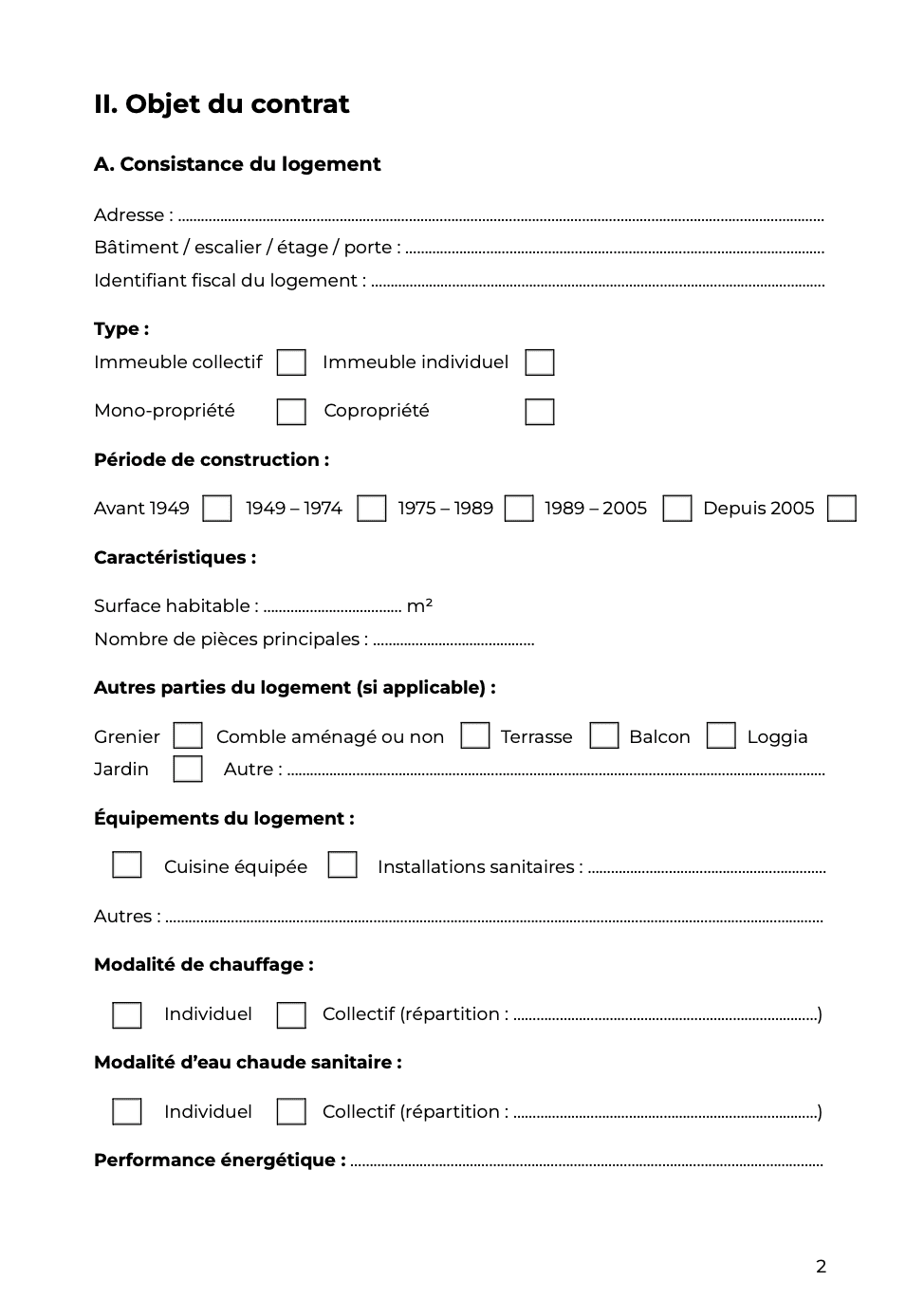
We have prepared a lease template compliant with the ALUR law that you can download for free in PDF.
Bare location: advantages and disadvantages
The unfurnished rental appeals due to its administrative simplicity and rental stability, but it is not always the most profitable.
Before choosing this management mode, it is essential to weigh its strengths and weaknesses.
Less flexibility
The main disadvantage of an unfurnished lease lies in its long duration and rigidity.
Once signed, the landlord can only regain possession of the property at the end of the lease, except for legal exceptions (sale, eviction for personal use, legitimate and serious motive).
Moreover, the taxation is often less advantageous than for furnished rentals.
Income is taxed in the category of property income, with two possible regimes:
the micro-property (30% allowance),
or the real regime, more suitable in cases of significant expenses.
A lower profitability
The rental profitability of an unfurnished rental is generally lower than that of a furnished property.
Applied rents are lower (on average -15 to -25%), and the landlord does not benefit from the advantageous tax regimes of the LMNP status. Moreover, the rent amount is often set in so-called tense areas (subject to rent control), and is 10 to 20% lower than furnished rents.
In contrast, it offers a higher rental stability: tenants often stay for several years, reducing vacancy and re-rental costs.
The unfurnished rental remains an excellent option for investors seeking simplicity, regularity, and tranquility, especially in areas with high residential demand.